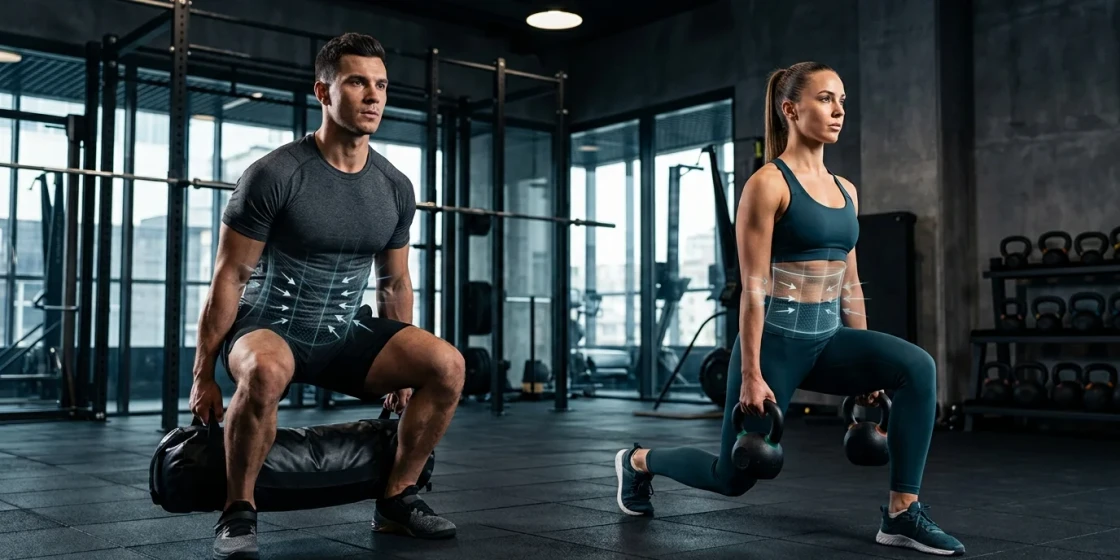
What is abdominal bracing and how do you do it right?
Sooner or later, every one of us hears a simple cue in the gym: “Brace your core!” But hardly anyone explains that it often means full abdominal bracing, not just tightening your abs.
In this article, you’ll learn:
- What abdominal bracing is
- How to do it properly - a simple 4-step guide
- Which exercises need it most
- Which mistakes to avoid so you don’t overload your spine
What is abdominal bracing?
Put simply: you take a deep breath into your belly, then firmly tighten the muscles all around your torso. This raises the pressure inside your abdomen and makes your core (the center of your whole body) stable.
Picture a can of soda. When it’s sealed and full, it can hold a lot of weight and is hard to crush, right? Your torso works the same way - the right amount of pressure inside your belly protects your spine from overload and gives you the strength to lift heavy weights.
So is tightening your abs the same as bracing?
Not quite!
- Tightening your abs is the conscious work of your muscles (the action).
- Abdominal bracing is the physical effect of that work, combined with your breathing and the rise in internal pressure (the result).
How you breathe matters here too:
- Lighter weights and easy exercises: you keep your torso tight, but keep breathing freely and smoothly.
- Very heavy weights (e.g. deadlifts, squats): your spine needs maximum stability. This is where the Valsalva maneuver comes in - you take a deep belly breath, hold it through the hardest part of the movement, brace your whole torso hard, and breathe out only once you’re past the toughest point.
💡 Tip: if you’re just starting out, focus on steady, controlled breathing and getting the hang of bracing first.
How to brace your core properly
Try these 4 steps in a simple exercise.
-
Get into position: stand comfortably and steadily, feet slightly apart.
-
Breathe in: take a deep, calm breath into your belly (no need to fill your chest to the max).
-
Use your imagination: picture someone about to give you a light punch in the stomach.
How do you react? The muscles all around your torso should tighten. Remember not to suck your stomach in. Instead of thinking “Suck it in!”, think “Tighten your whole midsection!”.
💡 Tip: put your hands on the sides of your belly - when you brace correctly, you’ll feel your muscles working not only at the front, but also at the sides of your torso.
-
Hold the tension: now do any movement. Remember, unless you’re lifting something heavy, your breathing should stay controlled, not completely locked.
When and in which exercises should you brace?
Bracing helps almost all the time, but it’s essential in movements where you need to hold a stable position under extra load:
- squats and deadlifts - without bracing, your spine takes the full force of a huge load,
- overhead presses - it stops your lower back from arching dangerously,
- bent-over rows - it protects your lower back while you stay leaned forward for a long time,
- lunges and Bulgarian split squats - it improves your balance and control,
- other exercises that need a stable torso, and even everyday tasks like carrying a pack of water bottles up the stairs.
When do you NOT need abdominal bracing?
Even though bracing is a great shield for your spine, it isn’t always worth using. This is especially true in two situations:
- Cardio and endurance sets - in fast movements with lots of reps (e.g. kettlebell swings, circuit training, jumps), holding your breath can leave you short of oxygen and dizzy. Here, smooth, rhythmic breathing comes first.
- Isolation exercises and machines - during bicep curls or flyes, your back is supported and your spine isn’t under load. Deliberately building pressure here is unnecessary and just makes your body stiff.
The most common bracing mistakes
The idea is simple, but beginners often make a few basic mistakes:
- Sucking your stomach in instead of tightening your whole torso. This actually weakens your spine’s stability instead of strengthening it.
- Bracing as hard as possible in every exercise. Good bracing means adjusting the tension - match how hard you brace to the movement and the weight you’re lifting.
- Holding your breath. Don’t force your breath in during easy exercises. Save breath-holding (the Valsalva maneuver) for heavy sets only.
- Forgetting about overall technique. If you ignore the right movement path, hip work, or a sensible weight, bracing alone won’t protect you from injury.
Summary
Learning to brace properly and control your breathing is one of the most important first steps in your training journey. It makes your workouts not only safer for your spine, but also much more effective - you’ll soon notice that lifting weights feels a lot easier!